(How) should triathletes implement torque training?
Is torque training the next big thing? Let’s break down the gap between recent scientific evidence and the way elite coaches and athletes implement torque workouts in practice. From theory to example torque workouts in cycling, swimming and running: here’s your triathlon guide to torque training. 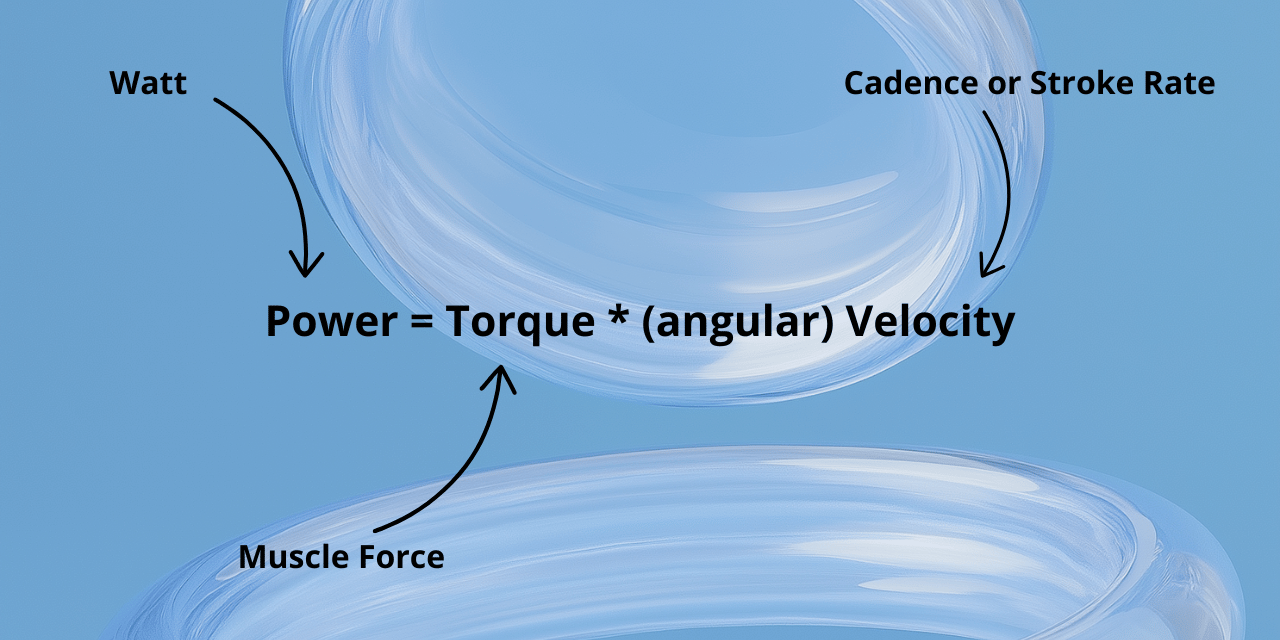
What is torque in sports?
Torque is the (rotational) force your muscles produce to move forward.
Torque is easiest understood in cycling, where power (watt) is a combination of torque and cadence. When you maintain power and decrease cadence, you increase torque. And vice versa.
Power = torque x (angular) velocity
So in cycling, torque is the force applied to the pedals and velocity depends on cadence.
In swimming and running, torque is the muscle force applied to the rotating joints. For instance: arm forces around the shoulder in swimming, and leg forces around the hip in running.
Torque itself is a combination of force and the distance between where you apply force and the actual rotation.
Torque = force x distance from the pivot
In cycling, this distance is determined by your crank length. In swimming this distance could equal arm length (force at hand, rotation in shoulder).
Torque is measured in Newton meters (Nm).
So how can triathletes apply this theory into training?
What is torque training? Workout examples
Torque training is deliberately increasing the torque by decreasing the movement velocity (while maintaining a high power output).
The exact strategy differs per sport.
Torque training in swimming
In swimming, you can increase arm torque by using paddles.
Paddles increase the surface area of the hand and create more resistance in the water. The extra resistance means you need more force, and therefore torque around the shoulder.
For this swim torque exercise, it’s okay to have a decreased stroke rate (arm speed).
Here’s an example swim torque workout you can perform after warmup:
Swim torque workout:
Repeat 3x:
-
2×50m with paddles, high torque
- Intensity: tempo (moderate)
-
2×50m without paddles
- Intensity: endurance (easy-moderate)
For more swim torque workouts, tailored to your fitness and triathlon goal, download the Aixsurge. It creates a bespoke triathlon training program, with torque workouts added to your program (only) when they matter.
Torque training in cycling
In cycling, torque intervals are performed at a low (40 — 60 RPM) cadence. These high-torque intervals are also known as low-cadence or big-gear intervals.
Research shows that there are no meaningful differences between doing these intervals uphill or on level ground. This means you don’t need hills to get the same training effect. However, using hills — outdoor or on a smart trainer — can make it easier to hold a low cadence.
Here’s an example cycling torque workout you can perform after warmup:
Cycling torque workout:
Repeat 3x:
-
4 minutes @ 40 — 60 RPM
-
Intensity: tempo (moderate)
-
Seated
-
-
3 minutes @ 90+ RPM
- Intensity: endurance
Get suggested cycling torque workouts, only when they are beneficial for your athlete profile and triathlon goal, using the Aixsurge app.
Torque training in running
Although increasing torque in running is not as straightforward as in cycling, uphill running on steeper grades is the most common way to increase hip torque per stride.
These torque intervals can be done on outdoor hills or on a treadmill by increasing the incline.
Run torque workout:
Repeat 3x:
-
2 minutes uphill
-
Intensity: tempo (moderate)
-
Incline: 4-6%
-
-
2 minutes jog down
- Intensity: endurance
Not all run torque workouts should be treated equally. Aixsurge only suggests torque workouts when they fit into your training program, and help you achieve your triathlon goal. This depends on your athlete profile, among others.
Torque training benefits: should triathletes do torque training?
Literature shows that when professional cyclists become fatigued, power loss is mainly a result of loss in cadence, not torque. On top of that, the same study shows that cyclists only use 57% of their sustained torque ability.
“When professional cyclists become fatigued, power loss is mainly a result of loss in cadence, not torque.”
Together, these findings suggest that — at least in well-trained cyclists — torque itself is usually not a performance limiting factor in long efforts.
However, another study does show that professional cyclists produced significantly higher torque than under 23 (U23) riders during efforts lasting from 5 to 60 minutes. This suggests that torque does matter and may explain why many elite coaches and athletes do implement torque training.
Here are the most important benefits of torque training. Note that often, the goal is not to improve torque per se, but rather to use torque as a tool to achieve other performance enhancing results.
Recruit different muscle fibers (type II)
Many triathlon workouts recruit endurance, slow twitch (type I) muscle fibers. But what about type II muscle fibers?
Fast twitch (type II) muscle fibers can support type I muscle fibers during endurance races like triathlons. But they are often under-trained. That is because type II fibers have a higher intensity threshold: they are not automatically recruited during low intensity training.
To improve the endurance performance of type II fibers, we need to:
- Activate (recruit) them during training, otherwise they will not adapt
- Stimulate them to become more endurance ready
In practice there are two clear ways to do that. First, increase intensity from endurance (zone 2) to tempo (zone 3). Second, increase the torque (force) required. Both will recruit more type II muscle fibers.
You can use the suggested torque exercises, described earlier.
Doing enough of this — not just during short sprint efforts — helps type II fibers to become more endurance ready.
Metabolically, this type of training will decrease the anaerobic activity in the cell and therefore decrease VLamax. Here’s why that is beneficial for many triathletes.
“Torque training will decrease anaerobic activity and therefore decrease VLamax.”
This is exactly why the triathlon training app Aixsurge adds torque workouts to your plan, only if they are beneficial for your athlete profile and triathlon goal. Try Aixsurge now.
Torque training to simulate races
There’s another, more practical reason why triathletes can benefit from doing torque workouts. They allow you to train at your race specific torque, while keeping the power low.
For instance:
Triathlon races are performed at a relatively high (swim/biker/run) power and torque. Imagine your race intensity in cycling equals:
Power = torque x (angular) velocity
300 watt = 32 Nm x 90 rpm
It’s hard to spend much time at 300 watts in training. But it’s much easier to ride at the same race specific torque with a low power output:
170 watt = 32 Nm x 50 rpm
You only have to drop your cadence.
So this torque workout allows you to accumulate time at your race specific torque, without the fatigue that comes from riding at full race power.
“Torque workouts allow you to accumulate time at your race specific torque, without the fatigue that comes from riding at full race power.”
More straightforward race situations that you can simulate with high torque exercises:
- Uphill cycling or running
- Accelerating from corners
- Typical low cadence time trial segments
Technique and movement specific force
Another common reason to use torque exercises is because they are assumed to improve technique and build functional strength.
Because movement speed is reduced, torque exercises tend to make technical flaws more obvious. You might suddenly feel that your swim catch is slipping, or notice a “dead spot” in your pedal stroke. The relatively slow movement gives more time to feel what’s going on and make small adjustments to improve the pattern.
Additionally, torque exercises require muscle force in the exact movement pattern you race in. They therefore load the same muscle and improve the same neuromuscular pathway (signals from brain to muscle). This is believed to increase functional strength.
That brings us to another question: does torque training replace gym work?
Torque training vs Gym training
The short answer is: torque training is not the same as gym training. Here’s a simple example to show why.
If you swim with paddles for 20 minutes, that’s roughly 1200 strokes. The resistance per stroke has to be moderate to be able to do that.
In the gym, you would never do 1200 straight-arm pulldown reps. Instead, you might do something like 3×10 reps with a much heavier load.
The same logic applies in cycling. Twenty minutes at 50 rpm equals 1000 pedal revolutions. When was the last time you did 1000 squats in one gym session?
“When was the last time you did 1000 squats in one gym session?”
So although torque workouts require more force, they are still muscular endurance, not pure strength work. Therefore, torque training and gym training are complementary, not interchangeable, as this study confirms.
A way to quantify how close (or far) your torque training is from gym training, or to objectively bring them closer (or further away), you need to measure torque in training. Here’s how.
How to measure torque in training?
(Only) in cycling, it’s fairly easy to measure torque. As this study states:
“Commercially available power metres can be used to assess torque cadence relationships in the field.”
Some bike computers show torque live, while other software tools allow to analyse it afterwards.
You can also pre calculate torque, based on a target power and cadence, using the formula:
Torque (Nm) = 60 * Power (W) / Cadence (RPM) * 2 * pi
Some coaches recommend a torque target of 0.7-0.9 Nm/kg body weight for women, and 0.9-1.1 Nm/kg for men. But it’s probably better to simply start with a slightly higher torque (lower cadence) and build gradually.
That brings us to the most common mistakes triathletes make when implementing torque training.
Common mistakes in torque training
If you’re new to torque training, there are a couple of common mistakes you should avoid. Instead, focus on the following do’s and dont’s:
Do build gradually
Don’t go all-in from the start. Instead:
- Increase torque slowly. Start with small paddles in the pool, a slight drop in cycling cadence or a moderately steep hill for running.
- Increase volume slowly. Begin with a few short torque intervals per week, before you consider a full meso training cycle with plenty of torque workouts
- Increase intensity slowly. Start with torque intervals at an endurance intensity before you consider doing VO2max torque intervals
If at any time you feel shoulder discomfort (swim), knee pain (bike) or hip pain (run), return to normal training before you focus on torque again.
Do maintain technique
Hitting your torque targets should never come at the cost of good technique.
In the gym, using ugly form to lift more weight is called “cheating”. Don’t be a cheater. It will result in bad habits that decrease technique, efficiency and race performance.
Don’t replace it for gym work
As mentioned earlier, torque workouts do not replace gym work.
You can choose to do less gym work and more torque work if that fits your program, but you should not expect the same adaptations.
Don’t go all-in
Many elite coaches and elite athletes use torque training. None base their entire program on it. Here’s exactly how to train like a pro triathlete.
There’s a time and place for torque workouts, but it does not replace all other training methods. Torque training is a tool, not a training religion.
FAQ
What RPM should I use for low cadence torque workouts in cycling?
Start your torque workouts 10-15 rpm below your normal cadence. If it feels good, gradually work towards the 40-60 rpm range, over several weeks or months.
Does torque training equal big gear training and low cadence training?
Yes. In cycling, torque training is the same as big gear training or low cadence training. Keep in mind that these are different from gym work though.
What gear should I use for torque training?
Use whatever gear brings your cadence down to about 40-60 rpm. But only when you’re used to torque work. Most riders should start with shifting only one or two gears harder than usual. It’s better to have a cadence target first and then adjust gearing. Don’t just aim for 53×11 because others do.
What does torque mean in cycling
In cycling, torque is the force you apply to the pedals. Torque and cadence combined result in power.
How much torque does the average cyclist produce?
Torque depends on power and cadence. If the average cyclist’s FTP is 200 watt at 80 rpm, that equals 24 Nm torque. Calculate your own torque, using this formula:
Torque (Nm) = 60 * Power (W) / Cadence (RPM) * 2 * pi
How to improve torque in cycling?
You can improve your cycling torque with low cadence (high gear) intervals. Here’s an example torque workout.
What is high torque in cycling?
For endurance-style torque intervals (3-5 minutes), high torque is roughly 0.7-0.9 Nm/kg for women and 0.9-1.1 Nm/kg for men. However, most age-groupers should probably start closer to 0.5 Nm/kg.
Literature
There are no meaningful differences between doing high-torque intervals uphill or on level ground.
- Bertucci W, Grappe F, Girard A, Betik A, Rouillon JD. Effects on the crank torque profile when changing pedalling cadence in level ground and uphill road cycling. J Biomech. 2005 May;38(5):1003-10. doi: 10.1016/j.jbiomech.2004.05.037. PMID: 15797582.
https://pubmed.ncbi.nlm.nih.gov/15797582/
When professional cyclists become fatigued, power loss is mainly a result of loss in cadence, not torque. On top of that, cyclists only use 57% of their sustained torque ability.
-
Leo P, Martinez-Gonzalez B, Mujika I, Giorgi A. Mechanistic influence of the torque cadence relationship on power output during exhaustive all-out field tests in professional cyclists. J Sports Sci. 2025 May;43(9):887-894. doi: 10.1080/02640414.2025.2478354. Epub 2025 Mar 15. PMID: 40089848.
Professional cyclists produced significantly higher torque than under 23 (U23) riders during efforts lasting from 5 to 60 minutes.
- Leo P, Mateo-March M, Valenzuela PL, Muriel X, Gandía-Soriano A, Giorgi A, Zabala M, Barranco-Gil D, Mujika I, Pallarés JG, Lucia A. Influence of Torque and Cadence on Power Output Production in Cyclists. Int J Sports Physiol Perform. 2022 Dec 5;18(1):27-36. doi: 10.1123/ijspp.2022-0233. PMID: 36470252.
https://pubmed.ncbi.nlm.nih.gov/36470252/
Torque training and gym training are complementary, not interchangeable
- Koninckx E, Van Leemputte M, Hespel P. Effect of isokinetic cycling versus weight training on maximal power output and endurance performance in cycling. Eur J Appl Physiol. 2010 Jul;109(4):699-708. doi: 10.1007/s00421-010-1407-9. Epub 2010 Mar 7. PMID: 20213468.
https://pubmed.ncbi.nlm.nih.gov/20213468/
Commercially available power metres can be used to assess torque cadence relationships in the field.
- Taylor KB, Deckert S, Sanders D. Field-testing to determine power — cadence and torque — cadence profiles in professional road cyclists. Eur J Sport Sci. 2023 Jul;23(7):1085-1093. doi: 10.1080/17461391.2022.2095307. Epub 2022 Jul 17. PMID: 35786391.
https://pubmed.ncbi.nlm.nih.gov/35786391/