Ironman training plan that builds all-day endurance
A full-distance triathlon training plan built from your physiology. Get progressive long-session development, recovery-aware scheduling, and a taper designed to bring you to race day with months of durable fitness and zero accumulated fatigue
The Ironman (3.8 km swim, 180 km bike, 42.2 km run) is an all-day event where aerobic base and muscular endurance determine your result. Speed matters far less than reliability. The ability to hold a sustainable pace for 8 to 17 hours, manage nutrition, and resist fatigue is what separates a good race from a survival march.
The plan builds these qualities systematically over months, not through hero workouts but through consistent, progressive loading with intelligent recovery
Reliability over hero workouts
Ironman preparation is not about single epic sessions. It is about accumulating weeks and months of consistent training that build durable aerobic fitness.
The plan distributes volume across the week to keep daily load manageable, uses progressive overload to extend long sessions gradually, and schedules recovery weeks before fatigue compromises quality. The result is deep fitness built on consistency, not occasional peaks followed by burnout
Plan phases: Base, Build, Peak, Taper
The Ironman plan follows a four-phase periodization structure adapted to the unique demands of full-distance racing
Base phase
Build aerobic capacity with progressive volume. Long rides and runs increase gradually. Technique work in swimming establishes efficiency for the 3.8 km swim. Strength sessions support muscular endurance
Build phase
Introduce race-specific intensity. Tempo and threshold sessions train sustainable pacing. Long sessions incorporate fueling practice. Volume reaches its highest sustained levels
Peak phase
Sharpen race fitness with race-simulation sessions. The longest rides and brick sessions happen here. Volume then begins to taper as quality takes priority over quantity
Taper phase
Systematically reduce volume while maintaining key intensity sessions. The body absorbs months of training and arrives at race day fresh, sharp, and ready for the distance
Sample Ironman week preview
Example training weeks for a full-distance triathlon plan. The balanced week includes 9 to 10 sessions. The time-crunched week covers the essential sessions in 7
Balanced Ironman week (9-10 sessions)
Day
Session
Notes
Mon
Rest and mobility
Recovery
Tue
Bike threshold/tempo and easy swim
Sustainable power
Wed
Run aerobic and strength
Durability and injury prevention
Thu
Swim endurance and bike endurance
Volume accumulation
Fri
Easy run and technique swim
Low stress, maintain frequency
Sat
Long bike and brick run
Race simulation, fueling practice
Sun
Long run and optional recovery swim
Aerobic base and durability
Example full-distance triathlon workouts
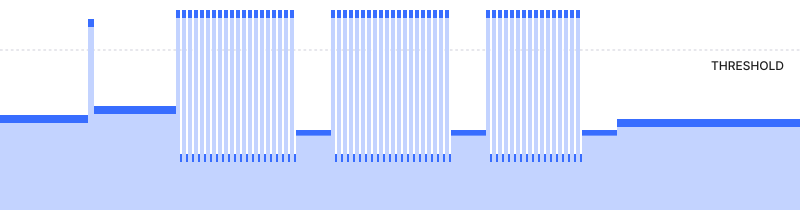
Full-distance triathlon training plan designed for athlete with a 0.6 mmol/l VO2max and 0.3 mmol/l VLamax in cycling. The objective of this phase is to enhance economization in running, cycling, and swimming through the incorporation of tempo workouts
Take a balanced meal with proteins, fats, and carbs 2 hours before the workout.
Objective
Enhance the maximal oxygen uptake (VO2max) and its delivery to working muscles. This workout design promotes improvements in stroke volume and mitochondrial function.
Additionally, it enhances recovery speed between intense efforts (lactate buffering), strengthens the ability to overcome resistance due to frequent re-acceleration, and boosts both anaerobic capacity and VLamax.
At Ironman training volumes, recovery is not passive. It is an active part of the training plan. Seamless device integration enables analysis of workout impact, daily stress, and sleep, ensuring your plan is always aligned with your recovery.
If your recovery data shows accumulated fatigue, the plan adjusts before overtraining becomes a risk. This prevents the common Ironman preparation trap of arriving at the start line overtrained and underfueled
Injury-risk reduction through adaptation
The most common reason athletes fail to reach the Ironman start line is injury during preparation. The plan manages injury risk by controlling the rate of volume increase, distributing load across disciplines, and scheduling recovery based on actual recovery data rather than arbitrary timelines.
When you miss sessions, the plan does not try to make up the volume. Instead, it recalculates priorities and adjusts the upcoming weeks to maintain a safe progression
Ironman training FAQs
How long should I prepare for a full Ironman?
20 to 30 weeks is typical, depending on your current fitness and experience. First-time Ironman athletes benefit from the longer end of this range. Athletes stepping up from 70.3 with a strong base can work with 20 weeks.
How many hours per week does this require?
Peak training weeks typically reach 12 to 16 hours for balanced plans, and 8 to 12 hours for time-crunched plans. The average across the preparation is lower, as base and taper phases require less volume.
Can I do this without a power meter?
Yes. Heart rate and perceived effort are sufficient for Ironman preparation. A power meter adds precision for cycling pacing on race day, but the plan generates effective workouts with heart rate alone.
How is fueling integrated into the plan?
Long rides and brick sessions include fueling practice notes. The plan tells you when to practice race-day nutrition strategies so you arrive at race day with a tested, reliable fueling plan. Gut training is as important as physical training at this distance.